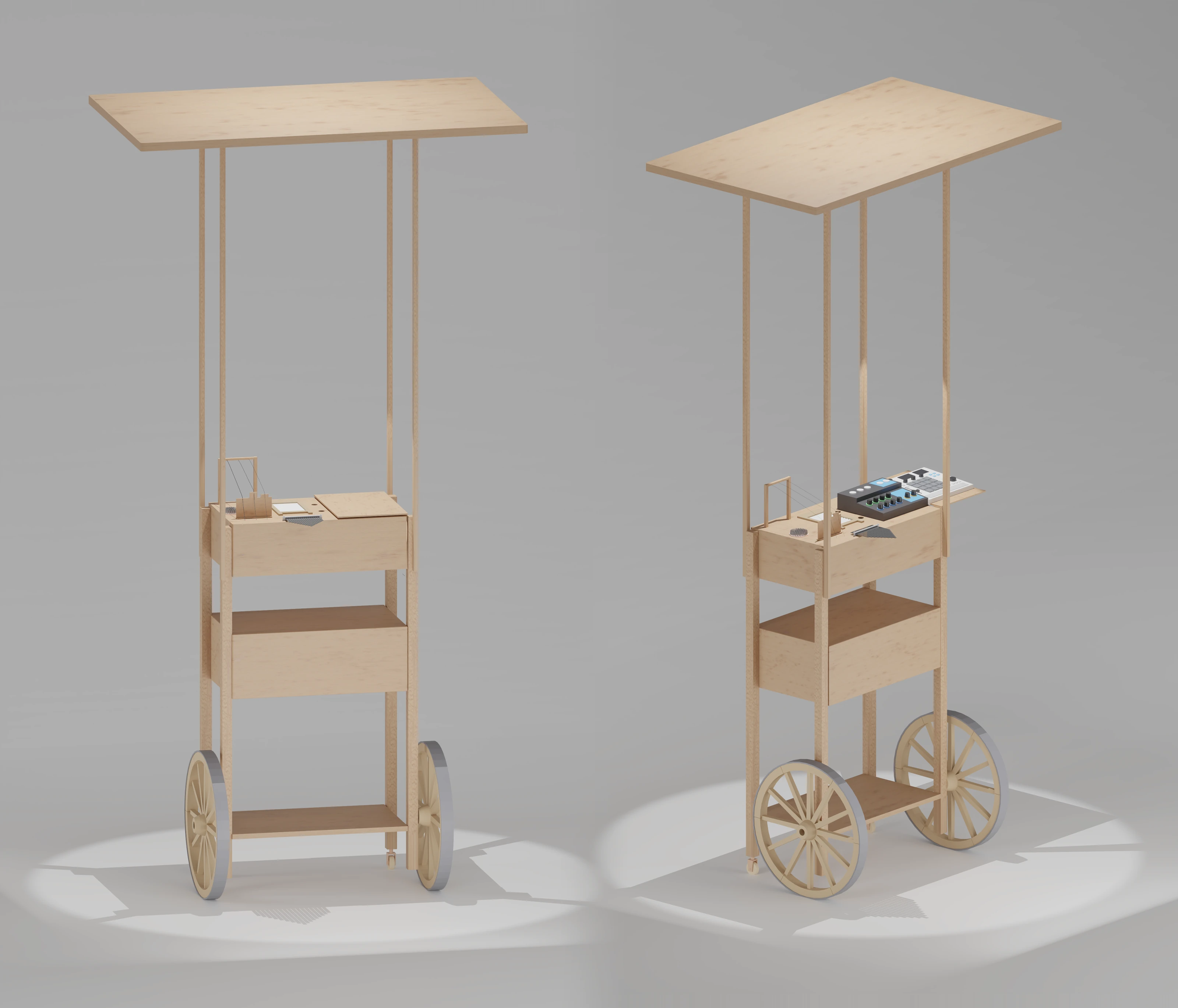
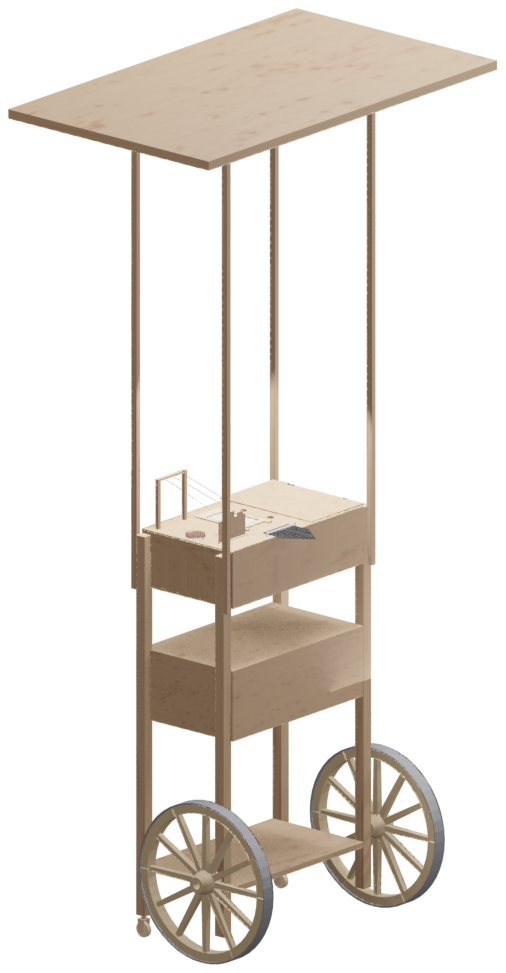
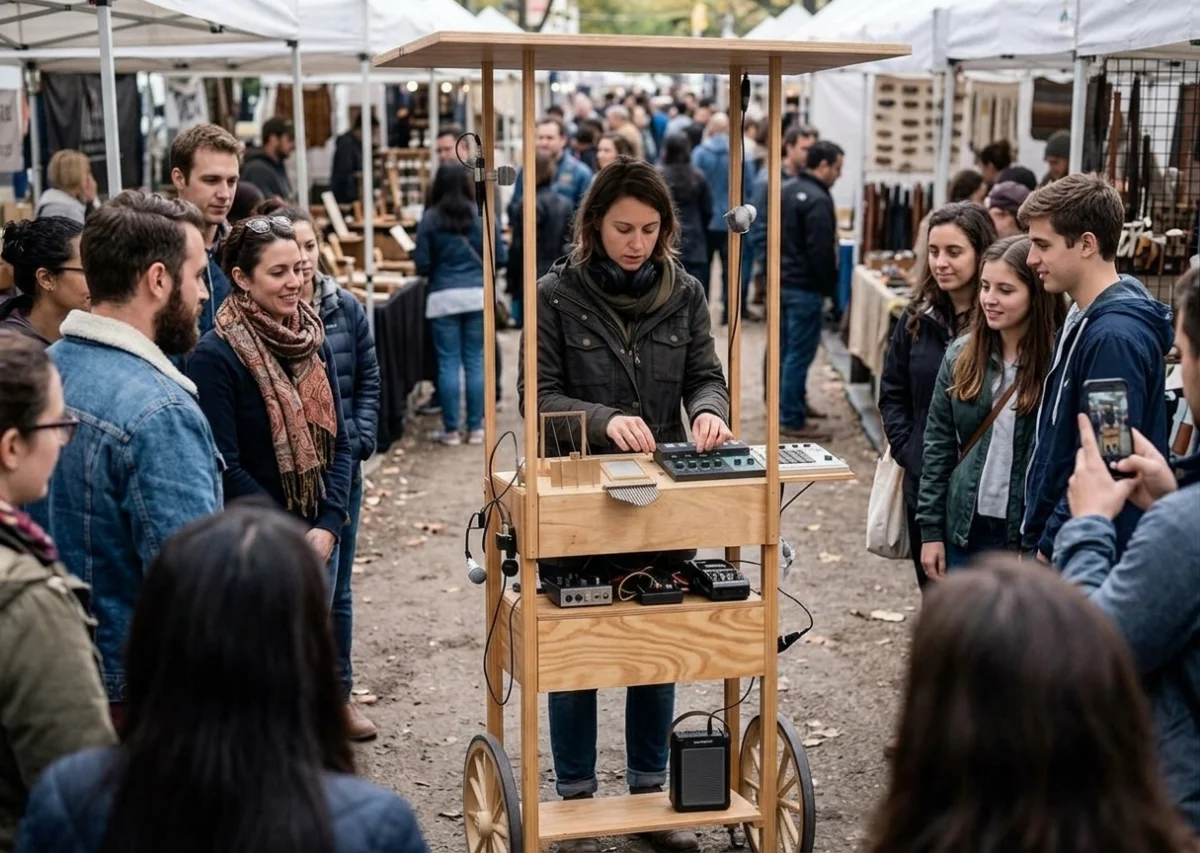
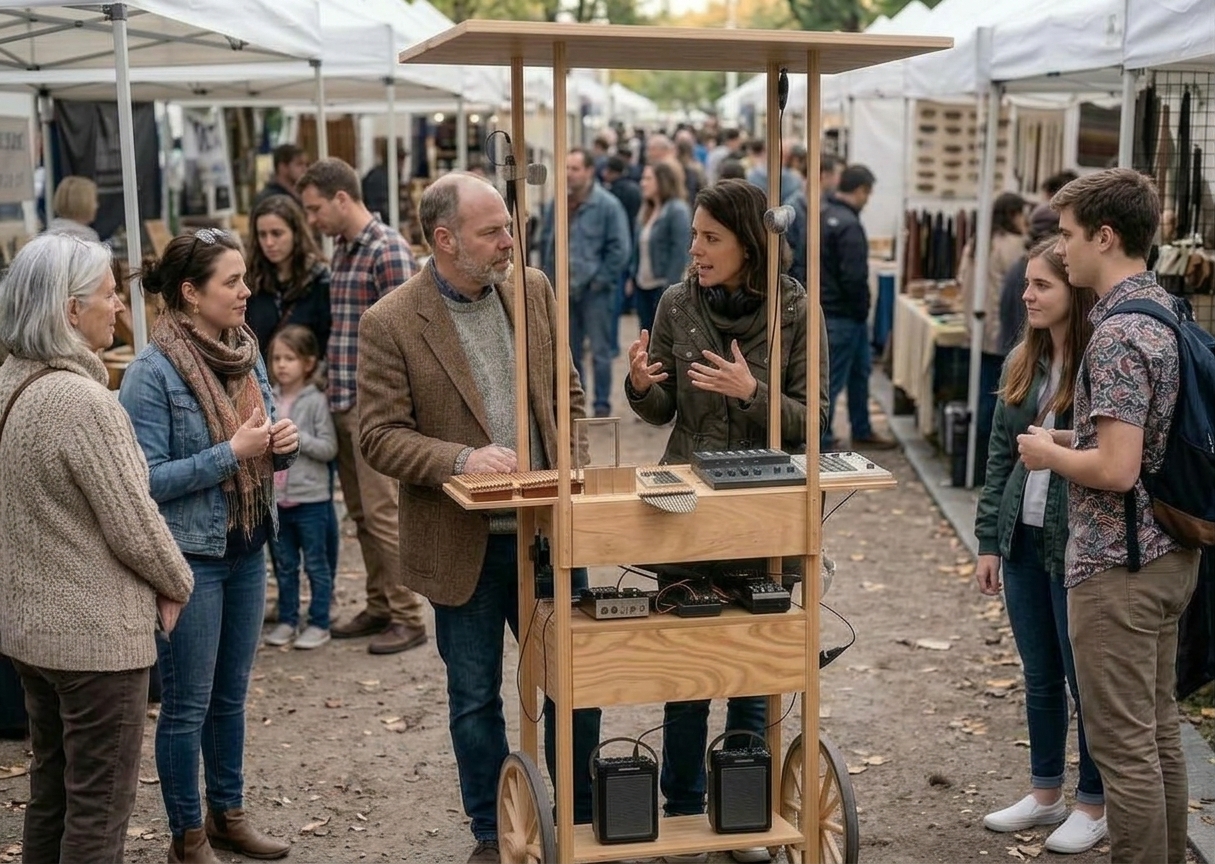
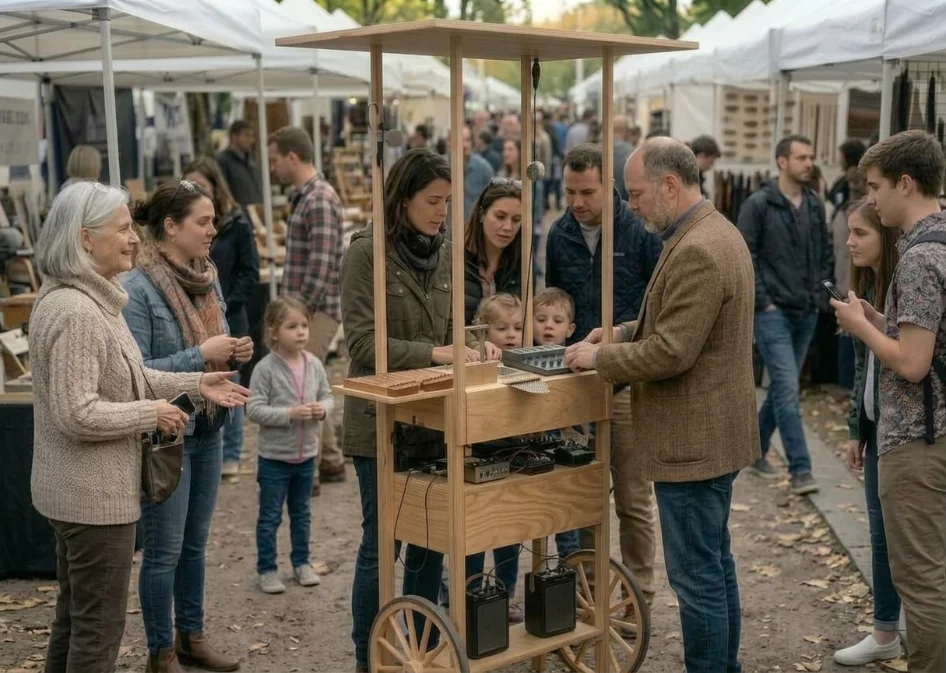
Foley-Bus is a mobile sound design structure that invites people to make sounds, learn and play together. It is a tool for activating public space.
Idea
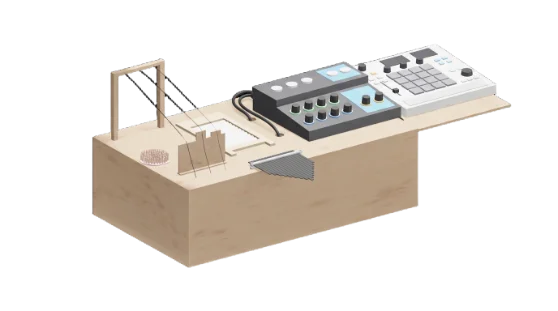
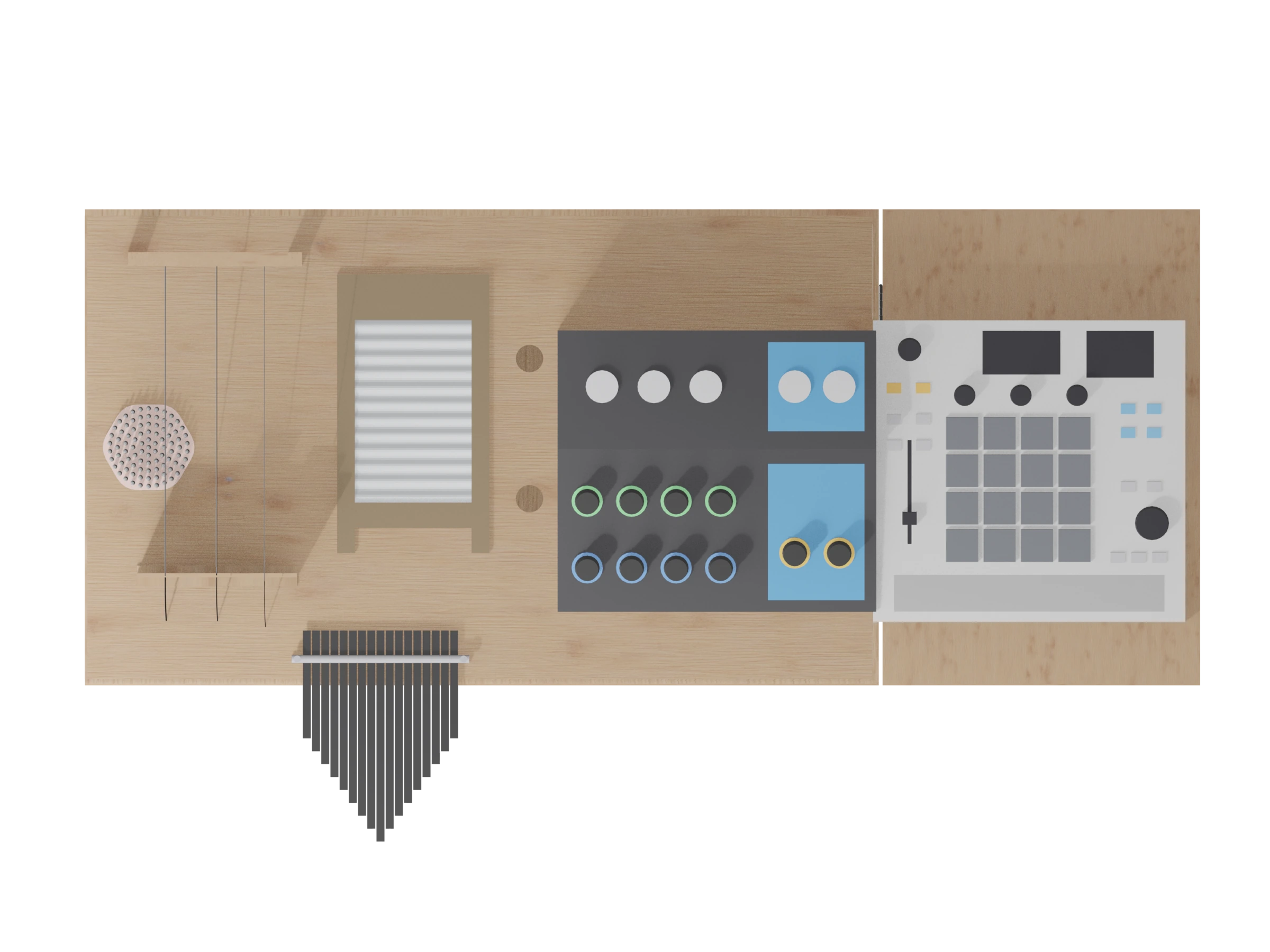
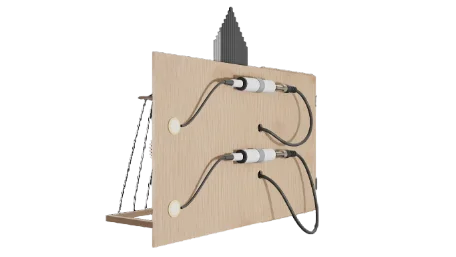
The cart carries sound-making objects on a resonant birch top. A string instrument, a kalimba, a washboard and a hairbrush are shown as examples; the final selection will follow acoustic research. Piezo microphones pick up the vibrations of the objects and of the wood itself, and a mixer and sampler process the sound live. It is inspired by Foley, the handmade sound craft of film production.
Why mobile
A cart can reach the places where people already are. It rolls into public spaces in the city and opens wherever it stops: the flap folds out into a table for the mixer and sampler, and people gather around the sound-making objects. It serves open sessions where visitors try the objects themselves, and live performances with a cinematic quality.
My Role
•Concept
•Product Design
•3D Modelling & Visualisation
•Sound Design
•Business Plan
02 — Anatomy
The gear travels inside the cart and comes out to play. Switch between its parts to see how each one works.
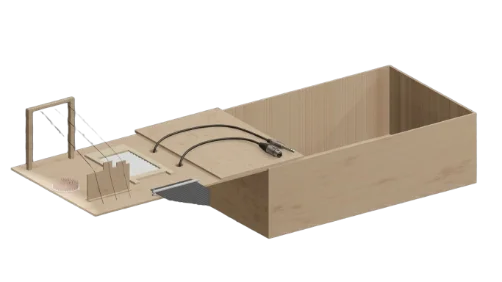
inside, under the top
resonant top
Click a letter to explore each part
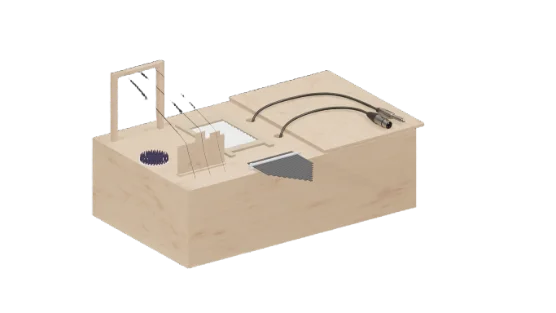
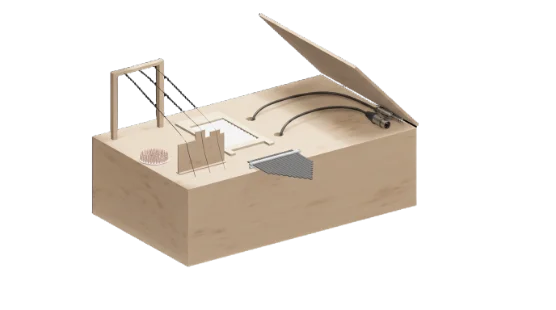
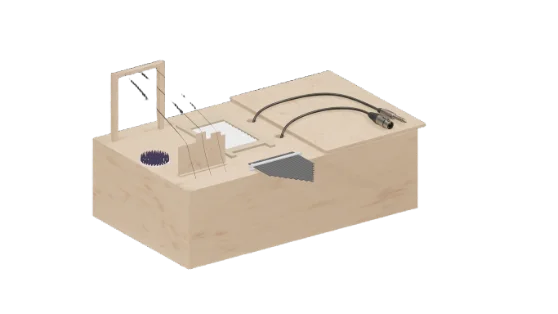
Birch, the playing surface. It carries interchangeable sound-making objects, shown here with a string instrument, a kalimba, a washboard and a hairbrush as examples. A hinged flap opens as a side table, and the whole top slides off for maintenance.
1side table closed
2side table opening
3mixer + sampler setup at the side table
Signal path on the top
Every cable on the resonant top: the mics and preamps sit under it, the signal comes up through two holes, and the mixer and sampler loop on the open flap.
Signal
Power
cable above the topcable under the top
1top in place
2slide the top out
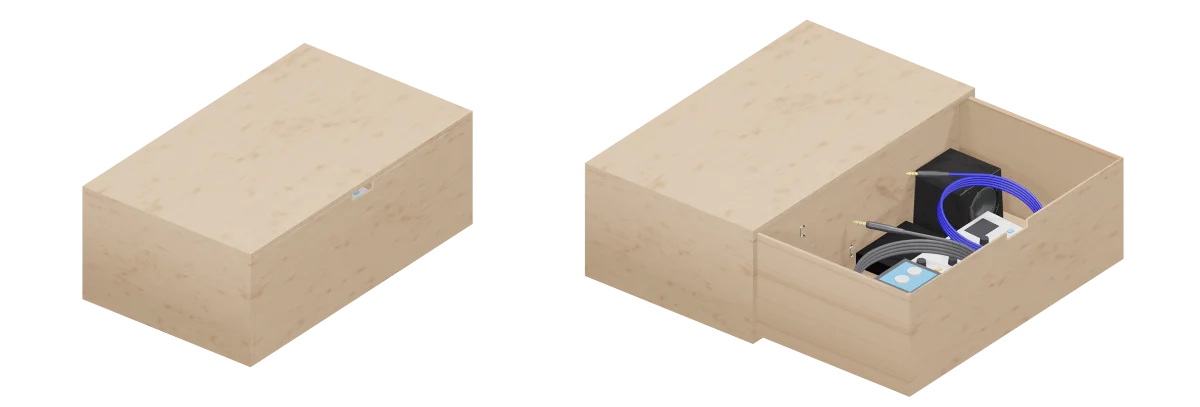
3mics and preamps come with it
1storage box, open
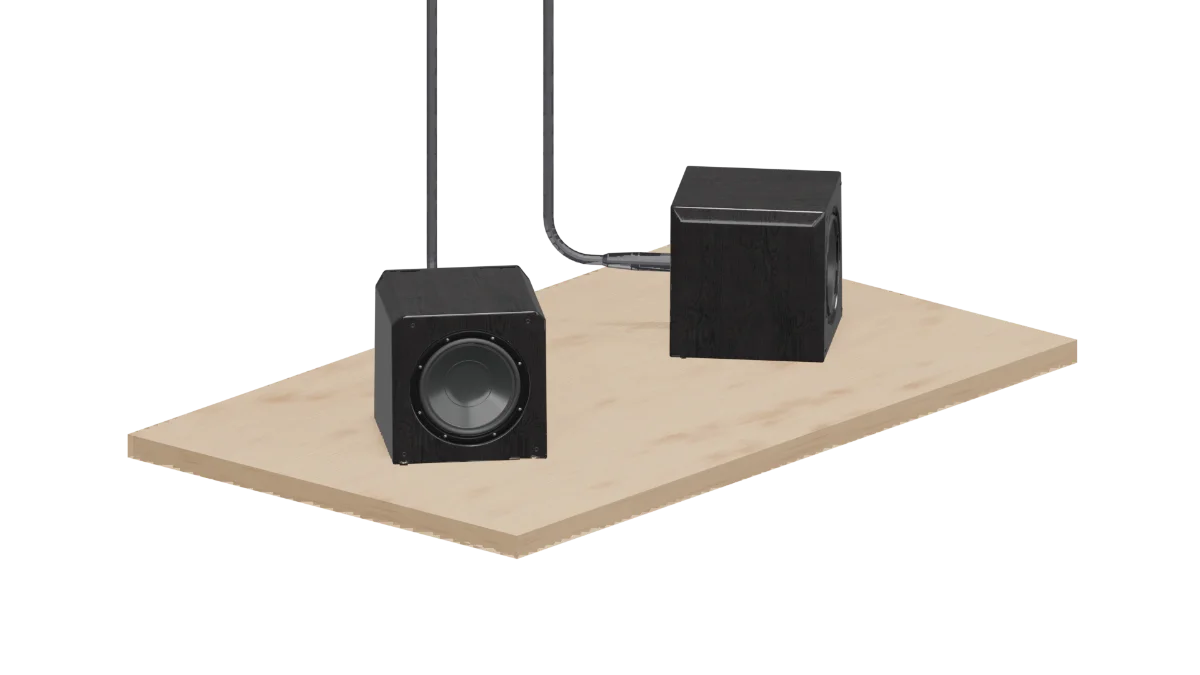
1loudspeakers in place
03 — In performance
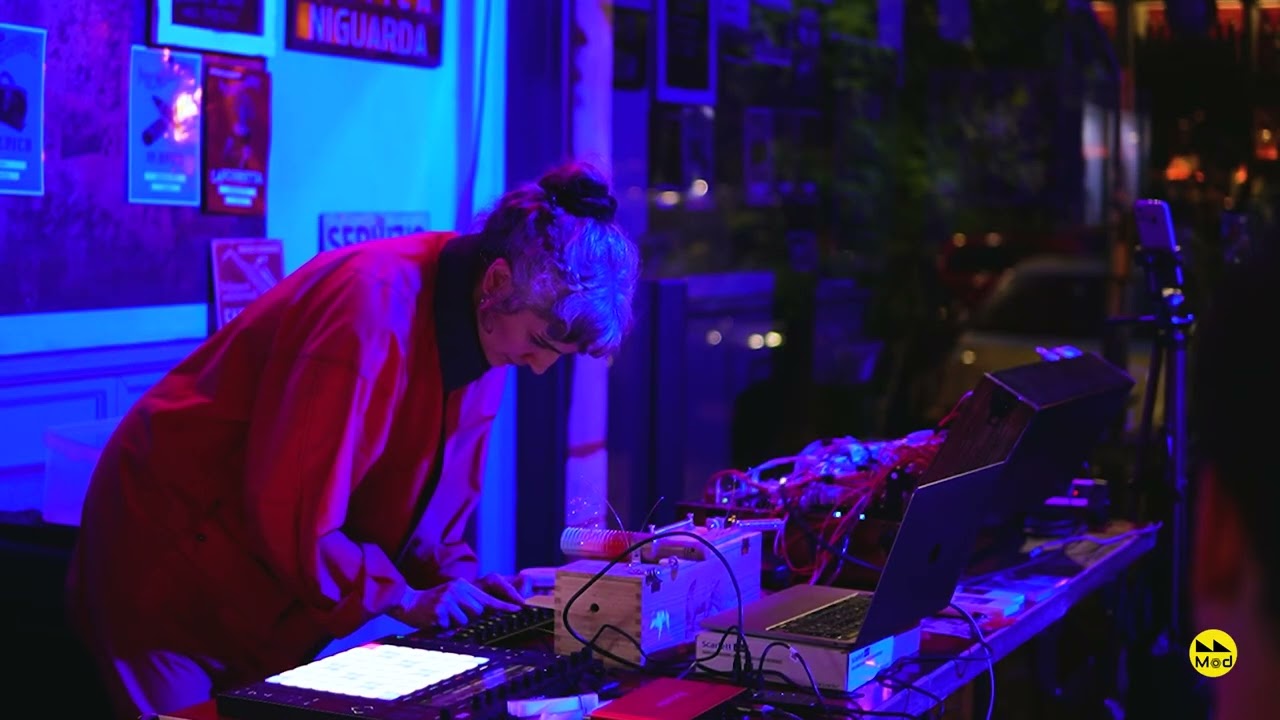
Foley-Bus builds on an earlier sound box, performed live in Milan in 2025.
The box is an old wine case that serves as the acoustic body and holds the piezo microphones. Springs and metal parts, such as pieces from a head massager, are mounted on it and played. Its way of making and processing sound is very similar to Foley-Bus: the microphones pick up the vibrations, and the sound is processed live.
Performance with the earlier sound box · Milan, 2025
Piezo microphones pick up the vibrations of a resonant body, and the sound is processed live.
Same way of playing
Objects mounted on a resonant body are activated to make sound.
What the cart changes
A birch resonant top that slides off for maintenance, a storage box for the gear, and wheels so it can travel.
04 — In use
The cart is wheeled into a public space, its flap is folded out for the mixer and sampler, and people gather around to make sounds with it.
The cart is still under construction. These images are representative and were produced with AI.
05 — Making
The project moves in four stages: a business plan, a 3D model, woodworking, and a first prototype.
01DONE
Business plan
Plan and presentation for the cart as a product.
02NOW
3D model & renders
The cart designed and visualised in 3D.
03DONE
Woodworking
An 80-hour woodworking course, completed in June 2026.
04NOW
Prototype
First physical cart, tuned by ear.
06 — What's next
The next steps run from the carpentry workshop to the first interactive sessions in January 2027.
01Until mid-November
Prototype construction
Building the prototype of the sound cart in the carpentry workshop.
02Until end of November
Acoustic checks and rehearsals
Checking how the cart sounds and rehearsing with it.
0313 December
First live performance
My first live performance with the sound cart.
04From January 2027
First interactive sessions
Open sessions where visitors try the cart, make sounds, learn and play together.
In parallel
While the prototype is built, I apply to relevant open calls to raise a budget, and I continue to develop the idea and make other types of wooden, unconventional instruments.